
 Snug Points
 Spring Collection


I’m going to start with a small confession: six years ago, I didn’t even know our menstrual cycles had phases. I knew “period week” and “not period weeks”… and that was basically it. I’m 34 this year, and once I started learning about follicular, ovulation, luteal, and how symptoms can shift across the month, everything clicked.
That curiosity turned into a proper rabbit hole: tracking patterns, learning what “normal” can look like, and (of course) researching whether essential oils can support us through these phases and bigger life stages too – like perimenopause/menopause, pregnancy, postpartum, and breastfeeding.
This guide explains what the research has looked at, what it suggests (without overpromising), and how to use essential oils in a safe, sensible way – especially when hormones and sensitivity are shifting.
Table of Contents
Menstrual cycle phases in plain English
Here’s the simple version you can keep in your head:
- Bleeding / Menstruation: your period
- Follicular phase: after your period, before ovulation
- Ovulation: mid-cycle (egg release)
- Luteal phase: after ovulation, before your next period (PMS often shows up here)
When I first learned this, I honestly thought: how did no one explain this properly at school? 🙃
Research words you’ll see
- RCT (randomised controlled trial): people are randomly put into groups (e.g., essential oil vs placebo) to compare results.
- Systematic review / meta-analysis: researchers gather multiple studies and look at overall patterns.
What the research is strongest for
The evidence isn’t equal across every life stage. Right now, the strongest research clusters are:
- PMS (late luteal phase): systematic review + meta-analysis evidence that aromatherapy can reduce PMS symptom scores overall.
- Period pain (bleeding phase / dysmenorrhea): systematic review + meta-analysis evidence suggesting aromatherapy can reduce pain compared with placebo.
- Labour: meta-analysis of RCTs suggests aromatherapy is often linked with reduced labour pain (and sometimes anxiety), depending on the protocol.
- Menopause: updated meta-analysis suggests aromatherapy can improve menopausal symptom scores (sleep, physical/psychological symptoms), but evidence quality varies by outcome.
How essential oils are used in studies
Most women’s health studies use essential oils in two main ways:
- Inhalation: smelling the oil (from a tissue/cotton pad, personal inhaler, or diffuser)
- Massage: essential oils diluted into a carrier oil (like jojoba/sweet almond) and applied to skin.
A key point: studies don’t all use the same oils, strengths, or schedules. That’s why results can look a bit mixed. Still, patterns show up – especially for PMS, cramps, labour, and menopause.

Menstrual Cycle by Phase
Luteal phase (PMS)
The luteal phase is after ovulation and before your period – and it’s where PMS tends to flare for many of us. And most cycle-based aromatherapy studies focus on the luteal phase.
(When I started tracking, this was my “aha” moment: I wasn’t randomly becoming more emotional or irritable. It was predictable. And that made it easier to support.)
What the research says
A systematic review and meta-analysis found aromatherapy can reduce PMS symptom scores overall (with the usual note: studies vary and more high-quality trials are needed). Research summaries and trials we discussed show that aromatherapy – especially inhaling certain oils regularly during the luteal phase – may reduce PMS symptom scores. The benefits often show up most in mood-related symptoms (like stress, low mood, feeling overwhelmed) rather than every physical symptom.
A 2025 RCT found that inhaling bergamot or grapefruit essential oil during the luteal phase reduced PMS symptoms compared with placebo (and grapefruit improved some menstrual symptoms).
Oils that show up most for PMS research
- Bergamot
- Grapefruit
- Neroli / bitter orange blossom (Citrus aurantium blossom)
- Lavender (commonly used in PMS research for emotional calm)
- Preferred oil by symptom severity: A 2024 study found that women with severe late-luteal symptoms preferred lemongrass and lavender, while those with milder symptoms preferred geranium bourbon. After one month of daily sniffing exercises, the mild-symptom group experienced significant autonomic nervous system modulation and symptom relief.
A simple luteal routine (easy + research-aligned)
If PMS is your main concern, here’s a routine that mirrors how many studies approach it:
- When: last 7–10 days before your period (adjust to your cycle)
- How: inhalation (diffuser 15–30 mins, or 1 drop on a tissue)
- Why it works as a habit: it’s consistent – many studies use regular daily exposure, not one-off use, however, best result – short sessions rather than “all day”.
- Example: Add a few drops to a diffuser for 20–30 minutes in the evening or put 1 drop on a tissue and take a few gentle breaths when you feel symptoms rising.
If you only do one thing: pick a scent you genuinely like in this phase. Because if you hate it, you won’t use it when you actually need it.
Bleeding phase (period pain / cramps)
Period pain (you’ll see it called primary dysmenorrhea in research) is one of the most studied areas.
What the research says
A systematic review + meta-analysis reported aromatherapy (including inhalation and massage across included trials) reduced dysmenorrhea pain compared with placebo.
Oils that show up most for cramps
- Lavender (the most consistent in research). Lavender specifically has clinical trial evidence for reducing pain severity in primary dysmenorrhea via inhalation and/or massage.
- Clary sage (mechanistic evidence + traditional use). Clary sage is interesting here too: there’s emerging mechanistic research for clary sage suggesting it may influence pathways involved in uterine contraction in experimental models. That doesn’t mean it “balances hormones,” but it helps explain why it’s commonly used for cramp comfort.
- Supportive blending partners often used in women’s aromatherapy routines: geranium, citrus oils
A simple “period day” routine
- Option A (easiest): diffuser for 15–30 minutes, or 1 drop on a tissue and a few slow breaths
- Option B (topical): diluted abdominal massage (very gentle dilution; stop if irritation).
Follicular phase + ovulation
Here’s the honest part: phase-specific research is sparse here. Most menstrual-cycle studies focus on luteal PMS or bleeding-phase pain, and treat follicular as a baseline comparison.
How I approach this phase (without pretending it’s “science-proven”)
Instead of claiming “phase optimisation,” a better and more accurate approach for me is this: during the follicular and ovulation phases, essential oils can support routine cues like:
- breath work
- focus
- confidence
- motivation
- a fresh-feeling home
Examples people (and I) often enjoy (experience-led, not strongly phase-studied):
- Neroli for “calm confidence ”robe”
- Citrus oils for lift and brightness
- Peppermint for clarity (if you tolerate it)
This is less “clinical protocol” and more “your scent wardrobe.”
Essential Oils When Pregnant
Pregnancy is a stage where it’s especially important to be careful. There is research – particularly around nausea and vomiting in pregnancy – but reputable guidance strongly discourages ingestion and encourages a conservative approach. Pregnancy is a stage where safety and guidance matter more than “trying the latest wellness tip.”
Nausea and vomiting (NVP)
- Lemon essential oil: Research summary highlights studies and reviews looking at aromatherapy for pregnancy nausea (especially first trimester), including lemon and other gentle options. Results vary by study design, but this is one of the more common research topics in pregnancy aromatherapy.
- Ginger, peppermint, and grapefruit: A 4-arm RCT of 74 first-trimester women tested ginger, peppermint, and grapefruit oils diluted in avocado oil for skin application. All groups improved on nausea, vomiting, and quality-of-life measures, though no group showed statistically superior results over placebo.
- Lavender: Multiple studies have found lavender aromatherapy reduces nausea, vomiting, and anxiety during weeks 6–16 of pregnancy. One quasi-experimental study showed significantly lower nausea scores and state anxiety in the lavender group compared to placebo.
- Peppermint + lavender combination: A combination product (“Pepperlav”) has shown promise in reducing the frequency and intensity of NVP in pregnant women, though further validation is needed.
Pregnancy safety basics
Do not ingest essential oils in pregnancy. UKTIS notes ingestion carries a risk of maternal (and therefore fetal) toxicity, and case reports include contractions and miscarriage following ingestion (causality unproven, but the risk is serious enough to avoid). Also, NHS maternity aromatherapy guidance typically assumes use is supported by appropriately trained staff and clear safety protocols – not DIY experimenting.
Practical pregnancy-safe framing
- Avoid essential oils entirely during the first trimester.
- Avoid ingesting essential oils.
- Prefer gentle inhalation over topical use (unless guided by a professional).
- Keep sessions short and stop if scent makes nausea worse.
- If you’re unsure, ask your midwife or clinician – especially early pregnancy.
Labour and Childbirth
Labour is one of the areas with relatively strong evidence. A meta-analysis of 14 RCTs reported aromatherapy was used via massage and inhalation, with oils like lavender, jasmine, rose, chamomile, bitter orange, and frankincense/boswellia appearing across studies; many trials reported reduced labour pain in aromatherapy groups.
The best way to position this
Aromatherapy is an optional comfort tool:
- it may help you feel calmer and cope better
- it doesn’t replace medical pain relief
- it’s worth discussing with your birth team beforehand
Postpartum (the weeks and months after birth)
Postpartum life is intense: sleep deprivation, recovery, emotional swings, and a huge identity shift. This is where I think “small, supportive rituals” can matter a lot, even if they’re not magic.
A meta-analysis of RCTs looked at aromatherapy for intrapartum anxiety and postpartum emotional symptoms (the evidence base exists, but it’s still developing). Research summary includes reviews suggesting aromatherapy may reduce postpartum mood symptom scores in some studies – often with lavender showing up frequently.
A gentle postpartum approach
For postpartum, keep it easy and comforting:
- short diffuser sessions (nothing overpowering)
- personal inhaler/scent pad for “reset moments”
- low dilutions if using topically (and only if you tolerate it).
And an important note: if you feel persistently low, anxious, detached, or overwhelmed, you deserve real support – talk to a healthcare professional. Aromatherapy can be supportive, but it’s not a substitute for perinatal mental health care.
Breastfeeding
Breastfeeding is another stage where I recommend a conservative approach, because babies are sensitive and safety data on specific oils is limited.
What the research says
Fennel is widely discussed in lactation contexts, and research summaries cite small studies exploring effects on milk volume/composition and infant weight gain in some settings.
Still: evidence isn’t strong enough to treat it as a reliable fix, and safety needs to come first.
Breastfeeding safety basics
The InfantRisk Center guidance is commonly summarised as: topical use only, no internal use, be mindful of interactions, and avoid applying oils where baby could ingest them (mouth/ears). So the practical version would look like:
- Avoid ingesting essential oils.
- Avoid applying oils to the nipple/areola area.
- If you use oils on skin, keep them away from where baby’s mouth touches, and wash off any residue before feeds.
- Prefer gentle inhalation if you want scent support.
Perimenopause and Menopause
Perimenopause
Perimenopause (often called “premenopause”) is the transition period where symptoms can feel unpredictable: sleep changes, mood swings, anxiety, hotter nights, irregular periods. Research is thinner here because many trials recruit women who are already postmenopausal.
What research looks like here
Perimenopause is less studied directly because many trials recruit women who are already postmenopausal (e.g., 12 months without a period). So for perimenopause, most guidance is symptom-based, borrowing carefully from menopause research.
A sensible approach in perimenopause
Use essential oils like you’d use any self-care tool: to support the symptoms you’re actually experiencing:
- Sleep disruption: calming, consistent evening scents
- Stress/anxiety: gentle inhalation routines (short, regular)
- Mood changes: uplifting-but-not-jittery oils (often citrus + florals)
Essential Oils that Help With Menopause
Menopause is one of the better-studied life stages for aromatherapy (outside the menstrual cycle research on PMS/cramps).
What the research says
An updated systematic review/meta-analysis suggests aromatherapy can improve menopausal symptoms across multiple domains (physical, psychological, overall symptom scores, sleep, and sexual function), though evidence quality varies by outcome.
Sleep-specific research in postmenopausal women also exists, with mixed outcomes depending on what’s measured (overall sleep score vs specific sleep components).
Important: evidence quality can vary from moderate to low/very low depending on the outcome and the study design. So it’s best to treat aromatherapy as supportive, not a guaranteed fix.
Oils studied in menopause research
- Lavender shows up frequently across trials and outcomes. Reported effects includes reduced hot flashes, improved sleep, sexual desire, depression, anxiety and overall quality of life [liebertpub; yapindo-cdn.b-cdn; pmc.ncbi.nlm.nih].
- Neroli (Citrus aurantium) inhalation has been studied for menopausal symptoms, sexual desire, and blood pressure measures. Reported effects includes reduced physical menopausal symptoms, increased sexual desire, lower blood pressure [onlinelibrary.wiley; onlinelibrary.wiley].
- Peppermint or lemon in aromatherapy massage has RCT evidence for reducing menopausal symptoms (in that study, peppermint performed better). Reported effects for Peppermint oil includes reduced overall menopausal symptoms (somatic + urogenital), while for Lemon oil includes reduces menopausal symptoms (somatic + psychological) [amtamassage; jewelstherapies].
- Salvia officinalis (sage) aromatherapy has RCT evidence for improving sexual function/satisfaction in postmenopausal women [pmc.ncbi.nlm.nih].
- Combined oils: Blends of lavender, geranium, rose, and rosemary diluted in carrier oils were used in massage studies and showed benefit for overall menopausal and psychological symptoms [pmc.ncbi.nlm.nih; pubmed.ncbi.nlm.nih].
A menopause-friendly routine that’s easy to follow
Night routine (sleep + nervous system):
- Diffuse a calming oil 30 minutes before bed (short session)
- Keep it consistent (same scent cue nightly).
Day routine (mood + steady energy):
- Use a personal inhaler or scent pad for a quick reset
- Choose oils that feel supportive rather than overpowering
Quick “by life stage” cheat sheet
So to summarise everything what was mentioned above, here’s a quick and handy cheat sheet for you:

What we still don’t know (and I actually think this is reassuring)
When wellness content gets too confident, it gets less trustworthy. The research gaps matter:
- There’s stronger evidence for PMS, cramps, labour, and menopause symptoms than for “phase-optimised” cycle routines.
- Follicular + ovulation phases are under-researched compared with PMS and cramps.
- Many studies are small and use different protocols, so results aren’t always consistent.
- Perimenopause specifically is less studied than menopause.
- Breastfeeding safety literature for specific oils is limited, so conservative guidance is smart.
Safety basics
I’m big on this: essential oils can be lovely, but they’re concentrated. This is especially important for pregnancy and breastfeeding.
Simple rules I personally stick to
- Dilute for skin use (rollers/massage/body oils) and never apply essential oils directly to skin.
- Patch test if you’re sensitive or prone to irritation.
- Avoid ingestion, especially in pregnancy and breastfeeding.
- If you’re pregnant/breastfeeding or have asthma/epilepsy/migraines, it’s worth getting professional guidance before using oils regularly.
Quick dilution guide (for adults)
- Roller (10 ml): 1–2 drops to start, up to ~3–5 drops
- Body oil (30 ml): 3–6 drops to start, up to ~9–15 drops
If you’re pregnant, postpartum, or breastfeeding, I’d generally go lower and lean on inhalation first.
Blends I Love for Calm, Balance & Uplift
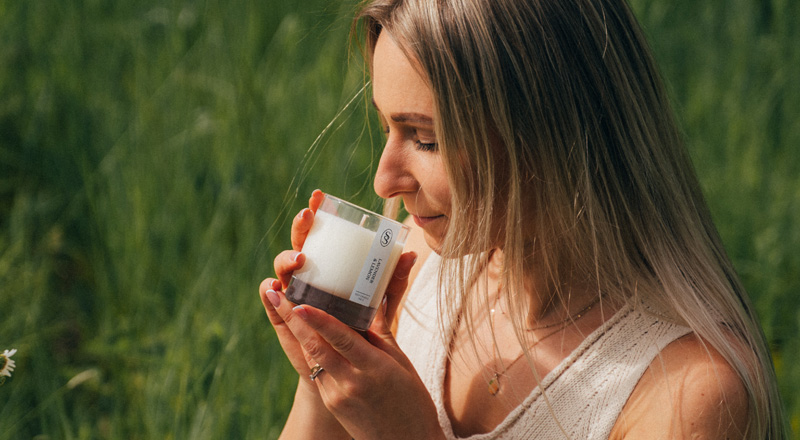
If you’d prefer a ready-made option (and honestly, sometimes that’s exactly what we need), our Snug Scent essential oil blends are designed to make “supportive self-care” feel effortless across different life stages. When I’m in my luteal/PMS days or just craving a softer nervous system, I tend to reach for Lavender & Ylang-Ylang – it’s my go-to for winding down and creating a calmer evening atmosphere.
For times when I want to feel more grounded and emotionally steady (those “I need to exhale” seasons), I love Rose & Patchouli – it’s comforting, balanced, and feels like a warm reset. And when I want a lift without feeling overstimulated – especially in busy weeks, ovulation phase, or anytime I want my space to feel fresh and elevated – Neroli & Bitter Orange is my favourite; it has that chic, perfume-like brightness that instantly changes the mood of a room. They’re an easy way to match scent to the moment – no complicated blending, just a few drops and a little breathing space.
Final thoughts
Learning how our bodies move through different seasons – cycle phases, pregnancy, postpartum, perimenopause, menopause – can feel like unlocking a new level of self-understanding. I know it did for me. Once I realised my mood, energy, sleep, and stress levels weren’t “random,” I stopped blaming myself and started building gentler routines that actually fit.
And that’s where essential oils can shine: not as a miracle cure, and not as a way to “fix hormones,” but as a simple, sensory support tool. The research is most convincing around PMS, period pain, labour comfort, and menopause symptoms, and less clear in areas like follicular/ovulation phase “optimisation” or breastfeeding-specific safety data – so the most trustworthy approach is to stay symptom-led, safety-first, and realistic.
If you want to start today, keep it easy:
- Pick one goal (sleep, calm, cramps, mood support)
- Pick one method (inhalation is usually the simplest)
- Pick one scent you genuinely enjoy
- Try it consistently for a week and notice how it supports your routine
Small rituals add up. And sometimes, a few calm breaths with a scent you love is exactly the kind of support you deserve.
With Love,
Rita x
