
Ever picked up a product and thought, “This looks fine… but what even is that ingredient?”. You’re not alone.
Most of us were never taught how to read a label, let alone question what’s in our candles, sprays, toothbrushes, or pans. We trust what’s sold on the shelf.
But over time, many of these everyday items quietly fill our homes with synthetic chemicals – some of which are linked to hormone disruption, allergies, or worse. And it’s not your fault. It’s confusing, overwhelming, and honestly? A bit exhausting.
Hi, I’m Rita 👋
I’m a chemist, ingredient obsessive, and co-founder of Snug Scent – a natural home fragrance brand I started with my husband to help people feel better in their homes.

But before that, I was exactly where you might be right now.
About three years ago, I started paying closer attention to the things I was using daily – especially fragrances, packaging, and kitchen products. EVEN with my background in chemistry, I was shocked to find how many ingredients were hidden, under-tested, or quietly doing more harm than good.
I know that most people didn’t exactly love chemistry in school – and product labels can feel like a foreign language. So I created this guide: to help you start making easy, realistic non-toxic swaps – without the stress, the guilt, or needing a science degree.
Let’s first understand what non-toxic means.
What Does “Non-Toxic” Really Mean?
“Non-toxic” is a term we see everywhere now – on cleaning products, beauty packaging, candles, and baby gear. But what does it actually mean?
The short answer: it’s not clearly defined. And it doesn’t always mean what you think it does.
In science, toxicity depends on concentration. Almost anything can be toxic at a high enough dose, and some ingredients are considered “safe” simply because they’re used in small amounts – not because they’re harmless.
So, a product might be labeled as “non-toxic” because the ingredient in question isn’t present in a concentration high enough to trigger an immediate toxic reaction. But that doesn’t mean it’s totally safe, especially with daily or long-term exposure.
Unfortunately, government regulatory bodies (like those in the EU, UK, or US) often can’t keep up with the speed at which new products and ingredients are released. Many chemicals make it onto the market without being thoroughly tested for long-term safety.
Sometimes, it can take years – even decades – before a commonly used ingredient is fully evaluated and restricted. A great example?
Lilial and Lyral. These synthetic aroma compounds were widely used in perfumes and fragranced products for decades to create fresh, floral notes like lily of the valley and cyclamen.
But over time, research found they were strong skin sensitizers (in other words, allergens) and potential reproductive toxicants.
- Lilial was classified as a suspected reproductive toxin.
- Lyral became known for causing allergic reactions.
Despite these concerns, they were used for years. It wasn’t until March 1, 2022, that both were finally banned in cosmetic products across the EU and UK.
This shows just how long it can take for regulation to catch up to science – and why it’s so important to make informed choices.
When we talk about “non-toxic” in this guide, we’re talking about products that avoid synthetic chemicals known to be harmful, questionable, or poorly studied. It’s not about being extreme or afraid – it’s about making swaps you can feel good about.
Why Go Non-Toxic at Home?
Most of us don’t question the items we use every day. Cleaning sprays, candles, food containers, fragrances – they’re sold in stores, so they must be safe, right? Unfortunately, that’s not always the case.
Many conventional products are made with synthetic ingredients and chemicals that have been linked to hormone disruption, skin irritation, respiratory issues, and long-term health concerns. And the worst part? A lot of those ingredients don’t even show up clearly on the label.
You might see vague terms like “fragrance” or “parfum,” which can legally hide dozens (even hundreds) of different chemicals. Or you might use plastic containers every day that slowly leach chemicals and microplastics into your food, especially when heated. We can’t control everything. But we can take small, manageable steps to reduce the toxic load in our homes. And it starts with swaps.

How to Start: Don’t Overwhelm Yourself
When I first started this journey, I wanted to change everything at once. But honestly? That only led to stress and burnout.
The best approach is this:
- Choose one product you use every day.
- Find a better version.
- Use it. Notice the difference.
- Then move on to the next.
And here’s something important: you don’t need to throw everything out right now.
You can absolutely finish using your current product while researching a healthier, non-toxic alternative. That way, you avoid waste, you won’t break the bank, and you give yourself time to make confident choices.
So next time you’re about to run out of something – maybe it’s your hand soap, your candle, or your food wrap – take a moment to look for a better swap. When it runs out, replace it. Simple. This method is not only more sustainable, it’s less overwhelming. One small step at a time really does add up.
This guide focuses on 10 common items that most people use regularly. They’re easy to swap, often affordable, and genuinely impactful. These swaps are featured in a printable poster (so you can save or share it), and I’ll explain each one a little more below.

Let’s Explore the Swaps (And Why They Matter)
1. Fabric Softener Sheets → Wool Dryer Balls
Why switch: Dryer sheets often contain synthetic fragrances and coatings that cling to your clothes – and your skin. Many contain chemicals linked to skin irritation, hormone disruption, and respiratory issues.
Why it’s better: Wool dryer balls are natural, reusable, and free from toxins. They reduce drying time, soften clothes, and you can scent them with a drop of essential oil if you’d like. Less waste, no chemicals.
2. Plastic Food Containers → Glass Containers
Why switch: Plastic food containers can leach chemicals like BPA or phthalates and microplastics into your food, especially when heated. Even “BPA-free” plastics often contain similar substitutes that may not be safer.
Why it’s better: Glass is non-toxic, doesn’t absorb odours or stains, and lasts far longer. It can go in the microwave, oven, dishwasher, and freezer without worry.
3. Plastic Water Bottle → Stainless Steel or Glass Bottle
Why switch: Reusable plastic bottles can wear down over time, especially with heat and repeated washing. This increases the risk of microplastic shedding and chemical leaching.
Why it’s better: Stainless steel and glass bottles are safer, more durable, and better at keeping your drinks tasting fresh. Plus, you reduce your exposure to plastics and help the planet.
4. Plastic Toothbrush → Bamboo Toothbrush
Why switch: Plastic toothbrushes can shed microplastics directly into your mouth as you brush – studies estimate that a single brushing session can release 30 to 120 particles, adding up to over 1 million microplastic particles a year, depending on brushing style and toothbrush type. And beyond that, billions of plastic toothbrushes end up in landfills or oceans each year. They’re not recyclable and take hundreds of years to break down.
Why it’s better: Bamboo toothbrushes are biodegradable, naturally antibacterial, and just as effective. It’s a low-effort, high-impact swap.
5. Tefal Pan → Cast Iron Skillet
Why switch: Many non-stick pans use a coating called PTFE (commonly known as Teflon), which can release PFAS (‘forever chemicals’) and other toxic fumes if overheated (above 260°C). This can even cause what’s called “Teflon flu” when inhaled in high concentrations. And while modern pans are marketed as “PFOA-free,” scratched or worn coatings can still shed millions of microplastic or nanoplastic particles into your food.es.
Why it’s better: Cast iron is naturally non-stick once seasoned, and it’s free from synthetic coatings. It lasts for decades and even adds a small amount of iron to your food.
6. Plastic Cutting Board → Wooden or Bamboo
Why switch: Plastic boards can get scratched, which allows bacteria to build up and microplastics to shed into your food. They also tend to hold stains and smells.
Why it’s better: Wood and bamboo are naturally antimicrobial, easier on your knives, and much more sustainable. Bonus: they look beautiful on your countertop.
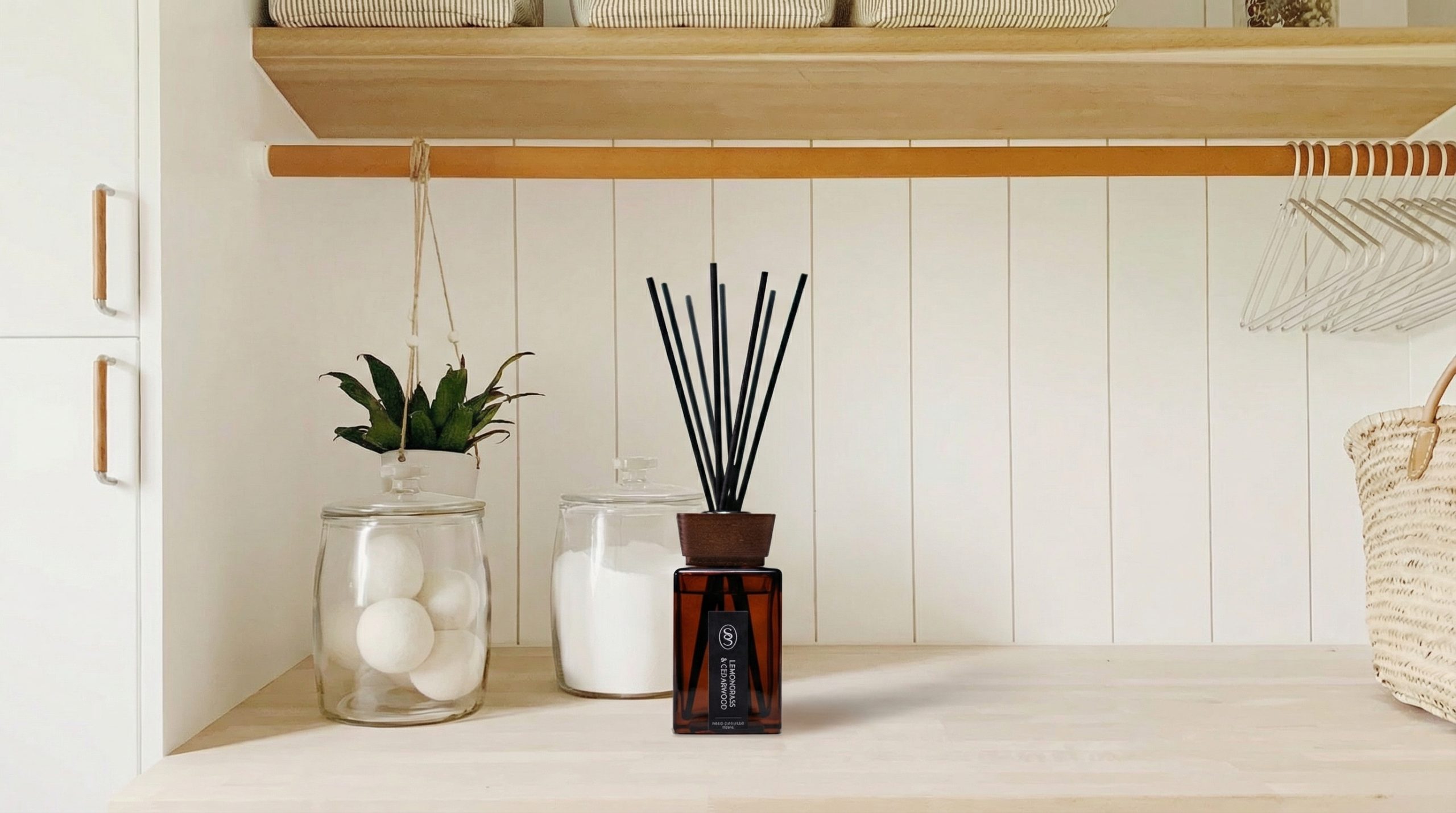
7. Synthetic Diffuser → Natural Essential Oil Diffuser
Why switch: Many commercial diffusers use synthetic fragrance oils, which often contain phthalates and other endocrine disruptors. These chemicals can linger in your home and affect your indoor air quality.
Why it’s better: Natural diffusers made with pure essential oils offer therapeutic benefits like stress relief, focus, or better sleep – all without the toxic load. They’re gentler on your body and your senses.
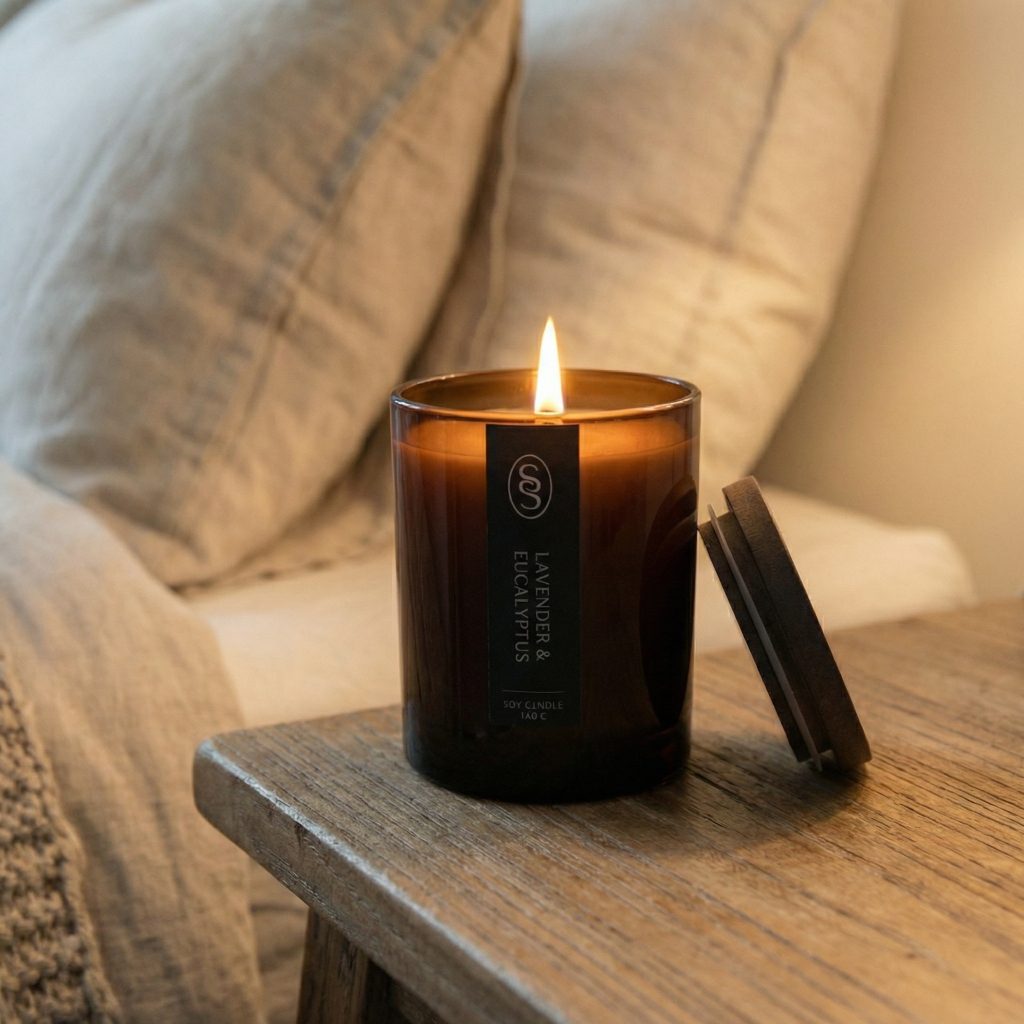
8. Petroleum-Based Candle → Soy Wax + Essential Oil Candle
Why switch: Most store-bought candles are made with paraffin wax (a petroleum byproduct) and synthetic fragrance. When burned, they can release toxins and soot into your air.
Why it’s better: Soy wax candles burn cleaner and more slowly. When scented with essential oils, they offer a calming, non-toxic atmosphere you can feel good about.
9. Artificial Room Sprays → Organic Essential Oil Sprays
Why switch: Conventional room sprays often contain synthetic fragrance, silicones and preservatives that can trigger allergies or headaches.
Why it’s better: Natural sprays made with organic grain alcohol and essential oils refresh your space naturally, with no harsh chemicals. They’re safe around pets, kids, and anyone with sensitivities.
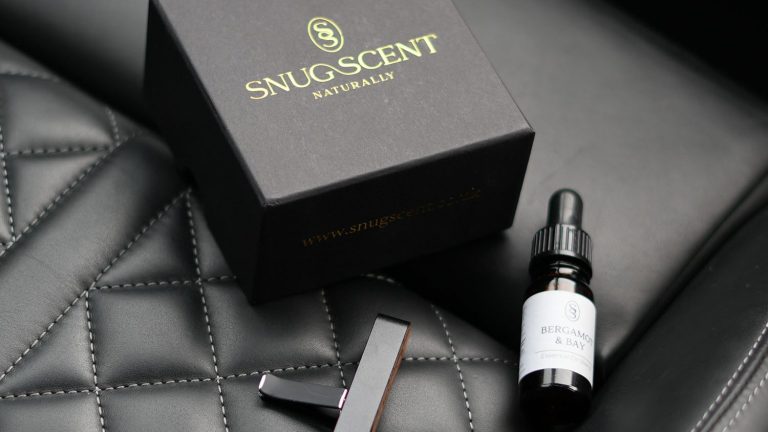
10. Car Air Freshener → Natural Car Diffuser
Why switch: Traditional car fresheners release synthetic fragrance continuously in a small, enclosed space. This can lead to headaches, nausea, and hormone disruption over time.
Why it’s better: A natural car diffuser uses essential oils and a reusable system to provide a subtle, clean scent without compromising your health.
Bonus Swap: Synthetic Potpourri → White Sage or Palo Santo
Why switch: Many potpourri products are soaked in synthetic fragrance and dyes, because they containdried botanicals that no longer have scent and/or colour. They look pretty, but can release VOCs into your air.
Why it’s better: Smudging with white sage or palo santo is a beautiful, natural way to refresh your space and set a calming mood. Just make sure it’s ethically sourced and used with intention.
Want Support Along the Way?
This journey doesn’t have to be lonely. If you’d love to connect with others who are just starting out or already making swaps, come join our free Facebook group: Natural Homes UK – Safe, Clean & Non-Toxic
It’s a safe, supportive space where we share recommendations, tips, and honest advice on all things low-tox, sustainable, and natural. You don’t have to do it all alone.
Download our FREE 10 Easy Non-Toxic Swaps guide.
Final Thoughts
Going non-toxic isn’t about doing everything perfectly. It’s about making small, intentional changes that align with how you want to feel in your home and your body.
The first swap is the hardest. After that, it gets easier.
And if you ever need a place to start, scent is a beautiful option. Natural candles or room sprays are often the first thing people notice when they walk into a room – and one of the quickest ways to feel better, instantly.
That’s why I started Snug Scent – to create beautiful, essential oil-based home fragrances that feel as good as they smell. No chemicals. No compromises.
You deserve to feel safe and well in your own space.
One swap at a time.